Water Damage Cleanup and Repair, Fire and Smoke Damage Restoration, Storm Damage Repair, Home Renovation
Toll Free: 844-762-5974
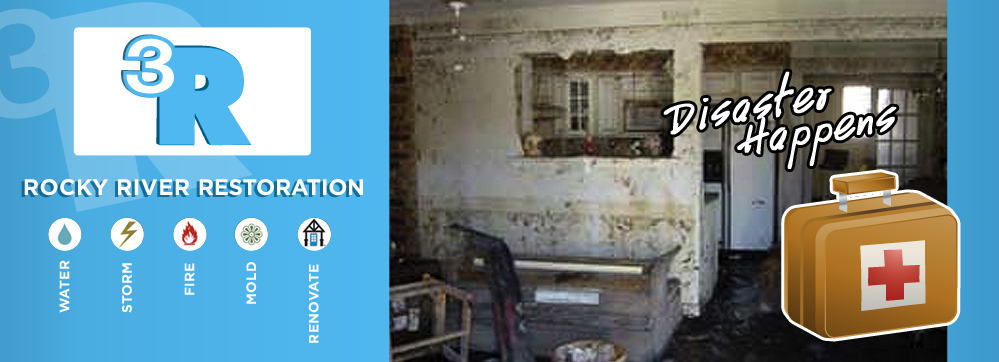
Ask yourself: If you had to leave your home or business for three weeks, what would you wish that you had done?
- Inspect every area and assess its vulnerability to water. Water is almost always a factor in disasters, whether from fire suppression, roof damage, plumbing failures, chemical spills or earth tremors, even when the damage originates on a remotely higher floor. Nothing but furniture and durable equipment should be stored directly on the floor. Paper records and items are instant casualties.
- Desk and table tops are vulnerable to water from sprinklers or runoff from higher floors, as well as to smoke and heat damage. Make sure important papers and files are put away in a filing cabinet or drawer.
- Take photos of each room in your house or apartment, save them to a CD and print hard copies. Keep one set to take with you and a second set off site (e.g., safe deposit box, relative's home). This gives you a digital inventory of the major contents in your house and what they looked like prior to water or fire damage.
- Back up your computers and keep the information where it's easily accessible in an evacuation as well as at an offsite location. (This is particularly important for people who work from home.)
- Businesses should maintain a moderate stock of emergency supplies. A few dozen plastic tarps, a couple of wet-pickup vacuums with wands and floor attachments, and a few floor squeegees provide a primary level of protection at a moderate cost. A case of absorbent wipes can also be useful. Rapid response is the key to damage control. The ability to swiftly deploy tarps over computers, production equipment, file cabinets and other critical components can dramatically curtail the extent of damage.
- If you have advance warning of a peril, charge cell phones, laptops, PDAs, etc. in case you're without electricity for a few days.
- Insurance information - health & homeowners policies
- Family photos, irreplaceable mementos/jewelry
- Digital inventory CD and printout
- Wallet, checkbook and credit cards
- Canned goods, baby food & food for pets
- Can opener/multi-purpose tool/sharp knife
- Bottled water, MREs, water purification tablets
- Work gloves & boots
- Water proof matches & candles
- Transistor radio, flashlight & extra batteries
- Duct tape, electrical tape
- Toiletries, toilet paper, feminine products, diapers, wipes
- First aid kit
- Cell phone, laptop & car chargers
- Extra clothing (i.e., socks, underwear)
- Sleeping bag
- Address book, paper, pens
- Medication & prescriptions
- Extra batteries
- Compile a list of dates, times and persons who you talk to concerning your claim.
- Get a copy of your insurance policy. This will define and determine your limits as well as your rights and responsibilities to and from your insurance company.
- Have a clear line of communication with your adjuster.
- Ask what the process is for listing and identifying the value of personal property.
- Ask about being reimbursed for any lost rent or interruption of business.
- Ask your adjuster for a sufficient monetary advance for purchases that are necessary. Include enough money to assist with your first month and security deposit for a temporary dwelling.
- Save all receipts for any and all meals, hotels, purchases, toiletries, vitamins, cosmetics, etc.
- Remember that it is your choice who the restoration company will be, not the adjuster's.
- If you feel that you are being pressured to choose a certain company, you can contact your local Attorney General's Office to file a complaint.
- Check reference, for any and all companies that you retain to perform work on your behalf.